
Heat stress in livestock farming: a growing challenge for all sectors

With the intensification of heatwave episodes, heat stress is emerging as one of the main risk factors in animal production. It durably affects animal health, welfare, and performance, and thus farm profitability.

A phenomenon that goes beyond temperature alone

What is heat stress?

Heat stress occurs when animals’ thermoregulation mechanisms are overwhelmed. Its intensity does not depend solely on temperature: humidity plays an equally decisive role, hence the use of the THI (Temperature Humidity Index) as a reference indicator.

A high THI can expose animals to severe stress, even at seemingly moderate temperatures.

Sensitivity varies by species: some dissipate heat poorly, while others produce it themselves via their digestion. Animals with high metabolism, particularly those growing, lactating, or reproducing, remain the most vulnerable.

Why make it a priority?

Heat stress triggers a series of cascading mechanisms: reduced feed intake, intestinal damage, oxidative stress, and electrolyte imbalances.

These mechanisms result in degraded growth performance, a drop in milk production, impaired fertility, and weakened immunity.

These effects often appear before any visible signs, making anticipation crucial.

With global warming and the increasing number of at-risk days, addressing heat stress has become a structural challenge for animal health and farm profitability.

Better management of heat stress allows for:

  • Preserve productive performance by limiting losses in growth, milk production, and fertility during the highest-risk periods.

  • Ensure animal health by reducing oxidative stress, intestinal imbalances, and immune weakening.

  • Maintain farm profitability by avoiding additional costs related to performance drops, treatments, and mortalities.

  • Anticipate increasing climate risk by structuring a sustainable response to the annual increase in at-risk days.

Sensitivity influenced by several factors

The consequences of heat stress do not manifest in the same way across all contexts. They result from the interaction of several factors:

  • Species and physiological stage

    Phases of high metabolic demand (rapid growth, peak lactation, gestation, laying period) amplify animal sensitivity and worsen the impact on results.

  • Digestive and metabolic health

    An animal whose intestinal integrity is compromised by heat will utilize ingested feed less efficiently, leading to performance degradation.

  • Farming conditions

    Ventilation, density, access to water, feeding schedule management… These are all parameters that modulate the intensity of perceived stress.

Acting on heat stress therefore requires a global approach : adapting farming conditions, adjusting feed rations, anticipating at-risk episodes, and mobilizing targeted nutritional solutions.

Products that help manage heat stress

    Thermo

    Support your animals during periods of heat stress.

    Product for pig ruminant chicken
Our associated digital solutions

Discover how our digital tools support you in your farming practices.

See all digital solutions

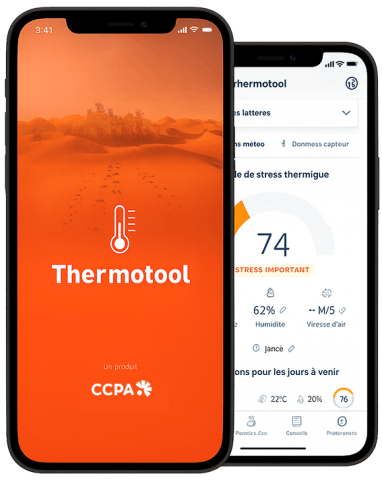
ThermoTool

Measure and assess the impact of heat stress on your animals.

Do you have a question?
Need to speak with one of our advisors?

Contact us