Swine Feed Efficiency



Pig feeding must meet the specific needs of each production stage, from the piglet to the sow, including growing and finishing pigs. The CCPA Group supports swine industry stakeholders with nutritional solutions adapted to the challenges of performance, feed efficiency, and cost control.
Pig feeding plays an essential role in the management of pig farms and represents a significant portion of the production cost of a finishing pig. Nutritional needs evolve throughout the production cycle. They differ between piglets, growing pigs, finishing pigs, and sows. Age, physiological stage, and production objectives must also be taken into account.
Feed formulation is based on knowledge of animal needs and available raw materials. It allows nutritional intake to be adapted to the different production phases and the context of each pig farm.
The CCPA Group supports feed manufacturers and stakeholders in the swine industry through its expertise in animal nutrition and zootechnics. This expertise is part of its vision of animal nutrition: Enhanced Nutrition. This approach combines an understanding of living organisms, knowledge of raw materials, farm data, and field expertise to develop nutritional solutions adapted to the challenges of pig farmers.
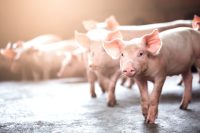
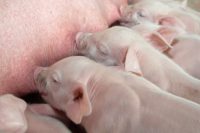
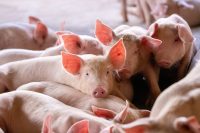
Pig farming involves several phases, with specific nutritional needs. Piglets, growing pigs, finishing pigs, and sows do not have the same requirements. Pig feeding must therefore evolve during the production cycle.
Feed composition and the quantities consumed vary notably according to the age, weight, and physiological stage of the animals. The nutritional value and digestibility of raw materials are also taken into account to formulate feed adapted to the different phases of pig farming.
Piglet nutrition is an important stage of feed management in pig farming. Needs evolve rapidly during the first phases of life and around weaning.
At weaning, the piglet transitions from a primarily milk-based diet to solid food. In weaned piglets, this transition occurs while the digestive system continues to evolve. Piglet feeding must therefore be adapted to this period and to the evolution of its nutritional needs.
Piglet feed formulation is based on knowledge of animal needs and the selection of raw materials. The formula for a first-stage piglet feed must specifically take this transition phase into account. The intake of energy, proteins, amino acids, vitamins, minerals, and trace elements is adapted to the needs of the young animal.
Digestibility and intake are also parameters to consider. Post-weaning feeding can thus be adapted to digestive and health challenges, feed cost control, or growth objectives.
After post-weaning, nutritional needs evolve as the pigs grow. Feeding must therefore be adapted to the different phases up to finishing.
Pig feed formulation allows intake to be adjusted to the animals’ needs. It takes into account the nutritional value of raw materials, nutrient digestibility, production objectives, and the growth profile of the animals. The formula for a finishing pig feed thus evolves with the animal’s needs and the different growth phases.
Feed efficiency is a major challenge during this period. It relates feed consumption to the performance obtained. The feeding strategy can also evolve according to farming conditions. During periods of heat stress in pigs, for example, feed consumption may decrease.
The dietary and nutritional needs of the sow evolve according to her physiological stage. Gestation and sow lactation are two periods with different needs. The sow’s feeding must therefore evolve during her reproductive cycle.
During gestation, feed management takes into account the sow’s needs and the evolution of her body condition. As farrowing approaches and then during lactation, her needs evolve to cover the requirements of the litter.
Lactation is a particularly demanding period. The nutritional needs of the lactating sow increase to support milk production. Her feeding must therefore allow for the adjustment of intake while taking her level of consumption into account.
Farming conditions and temperature can also influence feed consumption. During high heat, heat stress can notably lead to a decrease in intake.
In swine feeding, formulation relates the nutritional needs of the animals to the characteristics of the available raw materials.
Cereals, vegetable protein sources, and fats can be included in the composition of the feed. Their nutritional values and digestibility are taken into account in the formulation of compound feeds.
Formulation allows for the balancing of energy and nutrient intake. Proteins, essential amino acids, including lysine, as well as vitamins and minerals are specifically taken into account. This intake is adapted to the age, weight, physiological stage, and specific needs of the animals.
The CCPA Group’s formulation expertise is based on a detailed knowledge of raw materials, ingredients, and their nutritional value, as well as an evolving nutritional matrix. Enriched by laboratory analyses, experimental trials, and field data, this matrix contributes to designing precise animal nutrition programs adapted to the animals’ needs. It also allows for the consideration of feed efficiency objectives, farm performance, and formulation cost control.
This expertise allows for the development of feed formulations adapted to the different phases of pig production. It supports feed manufacturers and industry stakeholders in the formulation and manufacture of animal feed. Premix, concentrates, piglet feeds, and feed solutions complete this approach.
For the CCPA Group, feeding the swine species is part of a global approach to farm management. Animal needs, their environment, available raw materials, and production objectives are taken into account to support different pig farming systems.
This support combines formulation expertise with technical support for feed manufacturers and industry stakeholders. CCPA teams assist them in defining feeds and feeding programs, taking into account nutritional needs at each production stage, farming conditions, and technical-economic objectives.
This approach makes it possible to respond to several challenges encountered within the pig herd. Feed efficiency is one of them, particularly during the growth and finishing phases. Sow nutrition is another challenge, especially during lactation.
Climatic conditions are also taken into account. During periods of high heat, the nutritional strategy can be adapted to support animals facing heat stress.
To meet these various challenges, CCPA also offers a range of targeted feed solutions, notably to support the digestive comfort of piglets, the feed efficiency of growing and finishing pigs, sow lactation, or animal comfort during periods of heat stress. These solutions complement feeding programs according to the needs encountered on the farm.
For the CCPA Group, pig nutrition is part of a global approach, Enhanced Nutrition. It combines life sciences, animal nutrition expertise, farm data, and advanced technologies.
This approach allows for the consideration of the specificities of each farm and its environment to offer nutritional solutions that are increasingly precise and adapted to field realities.
It mobilizes the Group’s scientific, nutritional, zootechnical, and digital expertise.
The CCPA Group also develops decision support tools (DST) to assist swine industry stakeholders in their decision-making. Among them, Farm-E-Val® Pig allows for the monitoring and analysis of the technical-economic performance of finishing units, notably through growth and feed efficiency indicators. The ThermoTool® application, for its part, allows for the evaluation of heat stress risk in order to support the management of high-risk periods.
Optimise animal performance and welfare under challenging farming conditions.
Support your animals’ liver function and contribute to their well-being.

Minimise the impact of mycotoxins – aflatoxins.
Optimize your pigs' feed efficiency.

Support your animals during periods of heat stress.


Measure and assess the impact of heat stress on your animals.
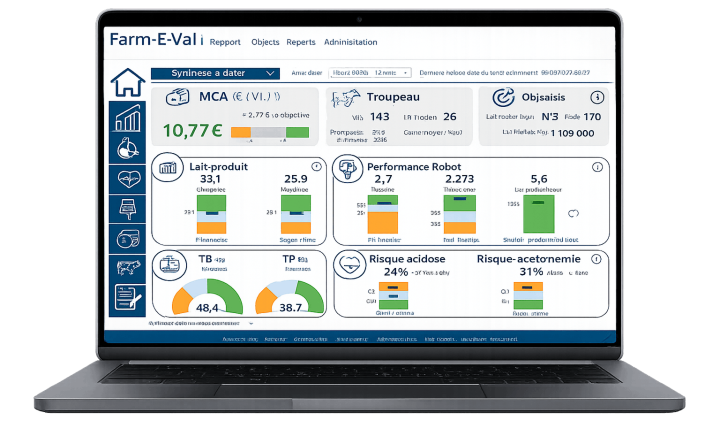
Turn your livestock data into practical decisions and performance drivers.