Feedstim
Optimise animal performance and welfare under challenging farming conditions.

Feed represents the primary cost item in all animal production. Improving the way animals utilize their ration means acting simultaneously on the profitability, competitiveness, and sustainability of livestock sectors.
Feed efficiency measures an animal’s ability to convert its ration into production: weight, milk, eggs, etc. The lower this index, the more effectively the animal utilizes its ration, the fewer resources are wasted, and the higher the margin generated by the farm. This indicator is universal, but the levers for improving it vary according to species, production systems, and the objectives of each sector.
In a context of persistent pressure on raw material prices, increasing market requirements, and growing environmental objectives, optimizing feed efficiency is no longer an option but a strategic necessity.
Reduce production costs by limiting the volumes of feed required for the same level of performance, or increase production (milk, eggs, meat) for the same amount of feed
Improve the consistency of results by securing performance despite hazards (health, climate, raw material quality).
Reduce nitrogen and phosphorus waste and greenhouse gas emissions by improving nutrient utilization.
Feed efficiency does not depend solely on the genetic potential of the animals. It results from the interaction between several factors:
Ration quality and precision: formulation adapted to actual needs, in-depth knowledge of raw materials, nutrient digestibility.
Digestive and metabolic health: the animal’s various organs are under great strain in high-performance livestock farming. Preserving their integrity is essential to achieving the desired objectives.
Rearing conditions: stress, health issues, or climatic hazards divert energy away from production.
Technical and economic management: measuring to adjust, identifying optimization levers at the herd or sector level.
Acting on feed efficiency therefore means mobilizing a global approach and correcting the parameters that hinder performance.
At CCPA, feed efficiency is approached as an integrated process, built on data from farms, research stations, and laboratories, and deployed daily with field teams.
This approach is based on several complementary dimensions:
The robustness of formulation matrices, the detailed characterization of ingredients, and the consideration of nutrient degradation kinetics make it possible to design feeds truly adapted to production objectives, regardless of the species.
Whether it is improving digestion, supporting liver functions, strengthening intestinal integrity, or supporting animals during phases of high demand, CCPA Feed Solutions and nutritional specialties act precisely on the factors limiting performance.
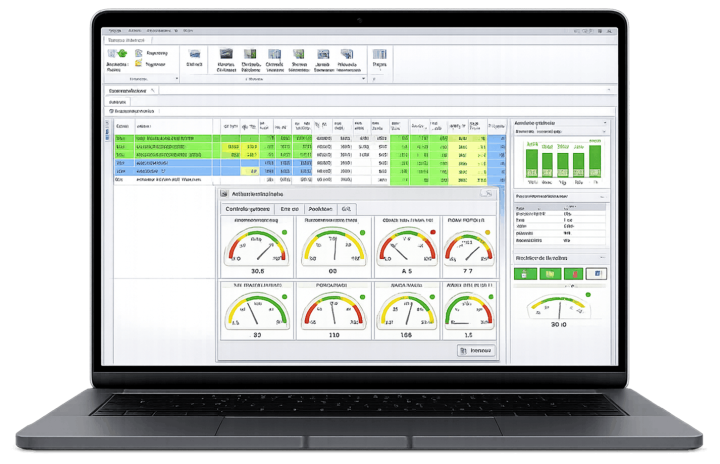
Tools such as Chorus® (ruminants), or Farm-E-Val®, make it possible to analyze performance, objectify results, calculate margins over feed costs, and guide decisions in real time.
Livestock audits, diagnostics, technical-economic analyses… CCPA engineers work alongside farmers and sectors to ensure progress is sustained over time.
Improving feed efficiency means producing more and better while saving resources. A decisive challenge at a time when competitiveness and sustainability can no longer be separated.
Optimise animal performance and welfare under challenging farming conditions.
Support your pets' digestive comfort and performance.
Optimise food costs and help reduce your environmental footprint.
Support your pets’ liver function and help ensure their well-being.
Optimisez l'efficience alimentaire de vos porcs.
Discover the studies and scientific research associated with our solutions.